κτῆμα τερπνὸν πᾶσιν ἀνθρώποιςThe pleasing property of all humanity ”Longus, 'Daphnis and Chloe' , prologue 3
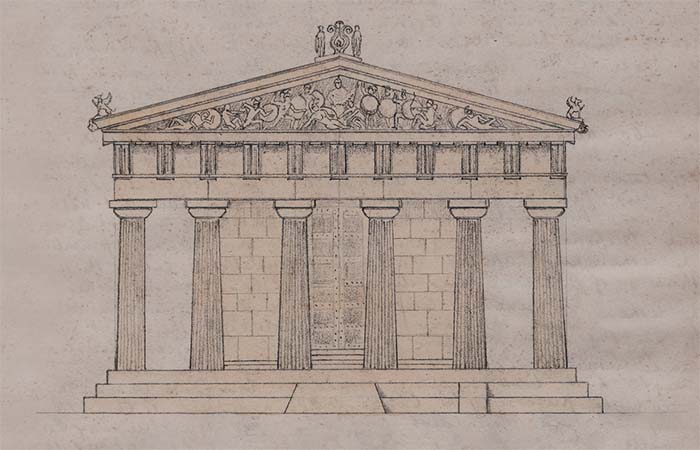
John Henry Middleton, ‘Temple of Ellianos Zeus at Aegina, west elevation’, 1875, pencil on paper, GBR/3437/JHMN/1/1
The Faculty of Classics Archives collect, document, preserve, research and promote archival evidence of the study of the ancient Greek and Roman world. In particular, the archives hold primary source materials connected to the work of Classics Faculty staff and alumni across the five caucuses: Classical literature, ancient philosophy, ancient history, Classical art & archaeology and linguistics.
Archives digitised so far for the Faculty foreground the archaeologist Alan J. B. Wace (1879-1957), who read Classics at Pembroke College (matriculated 1898) and was later elected to the Laurence Professorship of Classical Archaeology in Cambridge (1934-1944). Wace first visited Greece in 1902, as a student at the British School in Athens, and later became Director of the School from 1914 to 1923. He is best known for his
excavations at the Bronze Age site of Mycenae
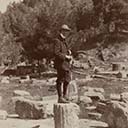
in the Peloponnese, which he initiated in 1920. However, he cut his archaeological teeth a decade earlier, excavating Neolithic sites in the region of Thessaly in Greece, between 1907 to 1910. Habitually, Wace observed and recorded in his notebooks and his photography all aspects of daily life occurring around him – the local dialect, architecture and agriculture, celebratory customs, food and dress. Hence his documentary legacy is a rich resource that far exceeds the bounds of pure archaeological research.
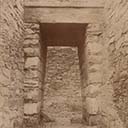
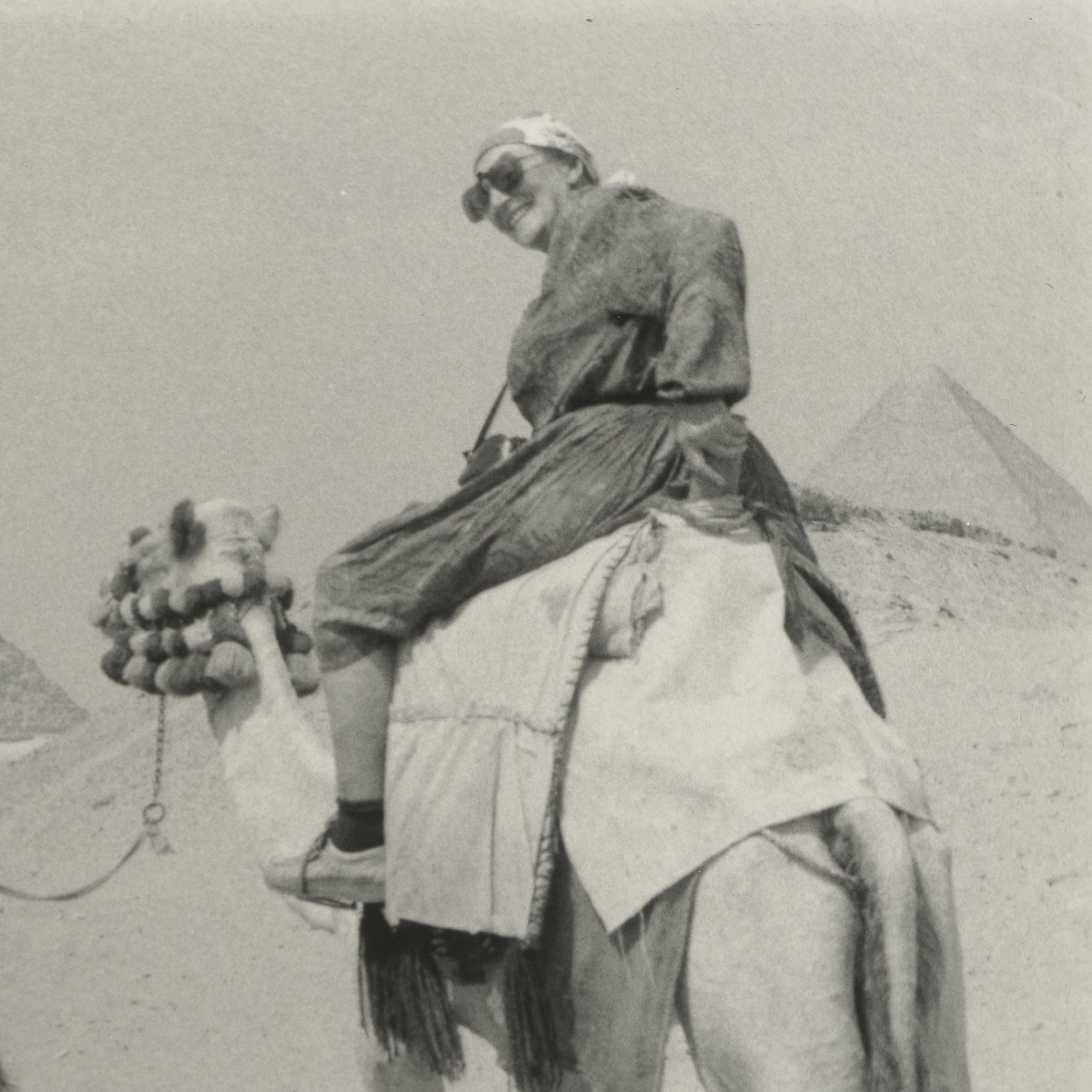
Seven notebooks of the architect, art historian and museum director John Henry Middleton (1846-1896) focus in particular on his studies of the surving structures of ancient Athens, and other classical architecture located in Greece and the eastern Mediterranean. Archaeological photographs taken by Richard Norton (1872-1918) and Richard Goodchild (1918-1968) came to be nested within the Papers of epigraphist Professor Joyce Reynolds (1918-2022). These images extend the geographical scope of material featured here to North Africa and the Libyan desert.
It is intended that future digitisation projects will provide access to other important collections held in the Archives, such as the notebooks of the soldier-scholar-spy Colonel William Martin Leake (1777-1860), and the Papers of John Chadwick (1920-1998), the Cambridge classicist who collaborated with Michael Ventris (1922-1956) in the decipherment of Linear B.
Archives | Faculty of Classics, University of Cambridge